A roof leak can seem small at first. Maybe you notice a stain on the ceiling, a drip during a spring thaw, or a musty smell in an upstairs room. But once moisture gets behind drywall, insulation, attic spaces, or framing, mould can start to become a bigger concern.
In Edmonton, roof leaks are especially common after freeze-thaw cycles, heavy snow loads, ice damming, spring melt, and summer storms. When water enters your home from above, it does not always stay where you can see it. It can travel along rafters, wiring, insulation, ceiling cavities, and wall assemblies before showing visible damage.
At Grimebusters, we’ve helped Edmonton homeowners deal with mould, water damage, odours, and restoration concerns since 1994. If you suspect mould after a roof leak, the safest first step is to understand what you’re dealing with and avoid disturbing contaminated materials before the area is properly assessed.
Why Roof Leaks Often Lead To Mould
Mould needs moisture, organic material, and the right conditions to grow. A roof leak can provide all three.
Common building materials like drywall paper, wood framing, ceiling tiles, insulation, and dust can all support mould growth when they stay damp. The problem is that roof leaks are often hidden. By the time you see a stain on the ceiling, moisture may already have been sitting above that surface for days or weeks.
This is why water damage and mould often go together. We cover this more closely in our blog on when to repair water damage to prevent mould, but the main point is simple: the faster moisture is addressed, the lower the risk of mould spreading.
Common Causes Of Roof Leaks In Edmonton
Edmonton homes deal with tough weather. A roof that performs well in summer can still be vulnerable during winter and spring.
Some common causes of roof leaks include:
- Ice dams that push melting snow under shingles
- Damaged or missing shingles after windstorms
- Poor attic ventilation causing condensation
- Cracked flashing around chimneys, vents, and skylights
- Blocked gutters forcing water back toward the roofline
- Heavy snow melt finding weak points in the roofing system
- Aging roof materials on older Edmonton homes
Not every roof leak creates mould, but any leak that leaves materials damp for an extended period should be taken seriously.
Signs You May Have Mould After A Roof Leak
Mould is not always obvious. In many cases, homeowners notice secondary warning signs before seeing visible growth.
Watch for:
- Brown or yellow ceiling stains
- Peeling paint or bubbling drywall
- A musty smell in upper rooms or closets
- Dark staining around attic sheathing or rafters
- Damp insulation
- Recurring condensation near the leak area
- Allergy-like symptoms that seem worse indoors
- Warped trim, soft drywall, or sagging ceiling areas
If you see visible mould, avoid scrubbing or sanding it. Disturbing mould can spread particles into the air and into other rooms. Our blog on why mould removal should not be a DIY project explains why containment, protective equipment, and proper removal methods matter.
Why The Attic Is Often The First Place To Check
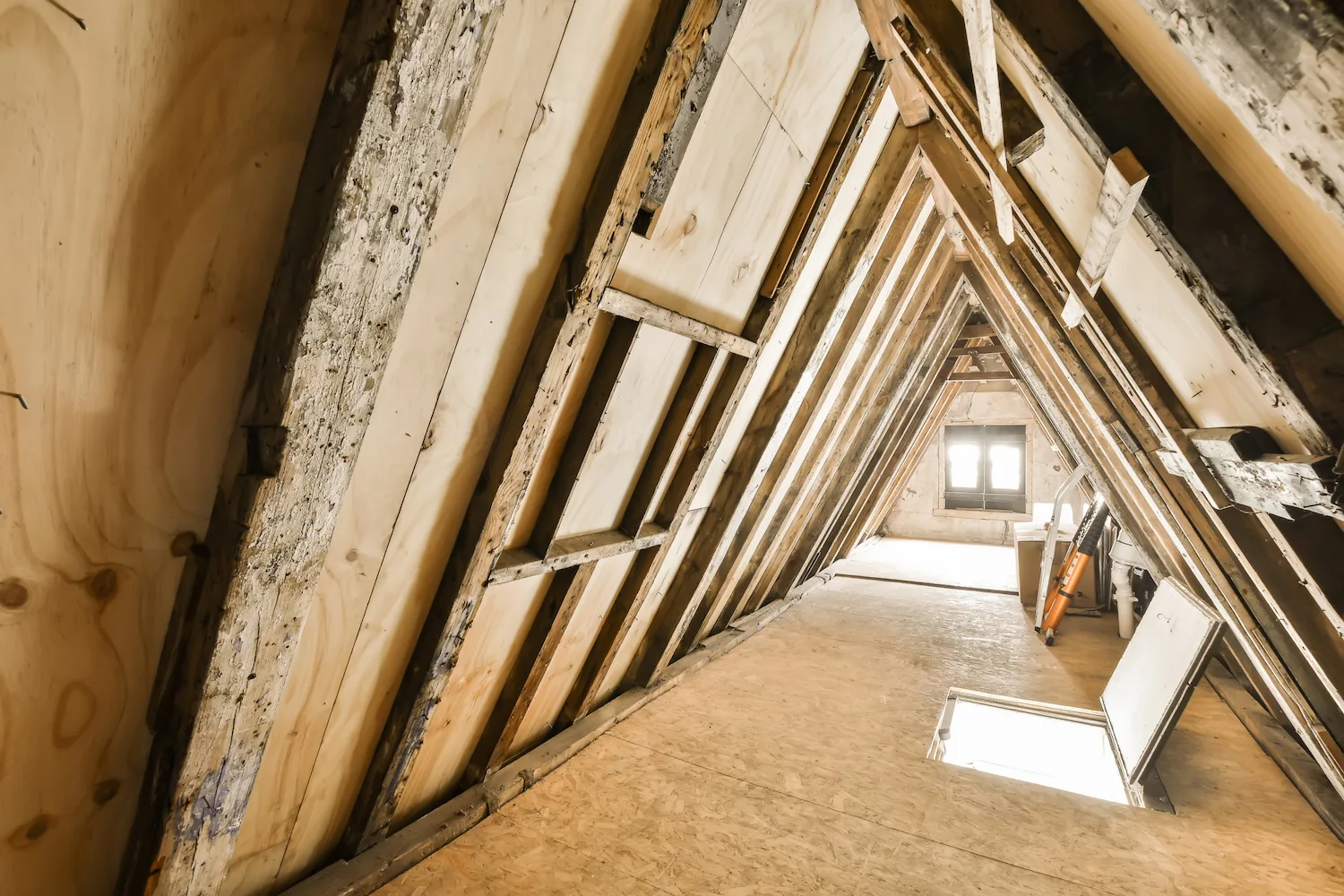
After a roof leak, the attic is one of the most important areas to inspect. Many leaks begin at roof penetrations, along sheathing, or near ventilation points. Water can soak into insulation before it ever reaches a finished ceiling.
Attic mould can also be caused by ventilation and condensation issues, not just active leaks. In Edmonton winters, warm indoor air can escape into the attic and condense on cold roof sheathing. Over time, that moisture can contribute to mould growth, even without rainwater entering the home.
That distinction matters. Fixing a roof leak may stop one source of water, but it may not solve mould caused by ventilation, insulation gaps, or humidity problems. A proper assessment looks at the full moisture source, not just the visible stain.
What You Should Do After Discovering A Roof Leak
If you find a roof leak, start with safety and documentation.
First, stop active water entry if it can be done safely. This may involve placing a container under a drip or calling a roofing professional for emergency roof protection. Do not climb onto a roof during icy, wet, or unsafe conditions.
Next, document what you see. Take photos of stains, dripping water, damaged belongings, wet insulation if visible, and any areas where moisture appears to have spread. Documentation can help with insurance conversations and restoration planning. We also recommend reviewing our guide on what to document after basement flooding, since many of the same documentation principles apply to roof-related water damage.
Then, arrange for the affected area to be assessed. If mould is suspected, avoid opening walls, pulling down ceiling materials, or removing insulation without proper precautions.
What Not To Do If You Suspect Mould
It’s understandable to want to clean the area right away, especially if the stain or smell is bothering you. But some quick fixes can make the problem worse.
Avoid:
- Painting over stains before the moisture source is fixed
- Spraying bleach into ceiling cavities or attic spaces
- Removing mouldy drywall without containment
- Running fans across suspected mould growth
- Disturbing wet insulation without protection
- Assuming the problem is gone once the surface dries
Fans can be helpful during water damage restoration when used correctly, but they can also spread mould particles if contaminated materials are present. This is one reason professional assessment is important before drying equipment is placed.
How Professional Mould Remediation Helps
Professional mould remediation is not just cleaning what you can see. It involves identifying the moisture source, protecting unaffected areas, safely removing contaminated materials when required, and helping restore the property properly.
Our process may include:
- Careful inspection of affected areas
- Moisture readings to understand how far water travelled
- Containment to reduce spread
- Safe removal of contaminated porous materials
- Cleaning and treatment of affected surfaces where appropriate
- Odour control if musty smells remain
- Coordination with restoration or reconstruction needs
Because we provide cleaning, remediation, restoration, and reconstruction support, we can help homeowners move from assessment to cleanup to repairs without dealing with several disconnected contractors.
Can You Stay In The Home During Mould Remediation?
Every situation is different. A small, contained area may be managed with limited disruption. A larger attic, ceiling, or wall cavity issue may require more planning.
Factors include:
- Size of the affected area
- Location of the mould
- Whether HVAC pathways are involved
- Whether occupants have asthma, allergies, or immune concerns
- The amount of material that must be removed
- Whether the leak is still active
We assess each property carefully and explain the safest next steps before work begins. Our goal is to protect your home while keeping communication clear and practical.
Why Roof Leak Mould Should Not Be Ignored
Mould problems rarely improve on their own if the moisture source remains. Even if the area dries temporarily, mould contamination can remain on materials and become active again when humidity or moisture returns.
Ignoring the issue can lead to:
- Larger areas of damaged drywall or insulation
- Persistent musty odours
- Staining that returns after painting
- Reduced indoor air quality
- More expensive restoration work later
- Hidden damage in attic or wall cavities
For commercial and multi-family buildings, hidden moisture can create wider property concerns. We’ve covered this in our blog on signs a commercial building has a hidden moisture problem, and many of the warning signs apply to residential properties too.
When To Call Grimebusters
Call us if you have a roof leak and notice staining, odour, visible mould, wet insulation, or recurring moisture. You should also contact a professional if the leak affected an attic, ceiling cavity, or finished wall where hidden contamination may be present.
As a family-owned Edmonton company with more than 30 years of experience, we understand how stressful property damage can be. Our trained technicians handle mould, water damage, odour concerns, and complex cleanup situations with care, discretion, and safety in mind.
We provide written quotes, honest assessments, and 24/7 emergency response when urgent help is needed.
Final Thoughts
A roof leak is more than a roofing issue. Once water enters your home, it can affect insulation, framing, drywall, indoor air quality, and long-term property condition.
If you suspect mould after a roof leak, don’t cover it up and hope it goes away. Fix the moisture source, document the damage, and get the affected area assessed before disturbing materials.
If you need help with mould after a roof leak in Edmonton or the surrounding communities, contact Grimebusters. We’ll help you understand what’s happening, what needs to be done, and how to move forward safely.