
- Home
- Service
- Asbestos Abatement
ASBESTOS ABATEMENT IN EDMONTON
Asbestos is most often discovered during renovations, repairs, or inspections of older buildings. Grimebusters provides professional asbestos abatement for residential and commercial properties across Edmonton and the surrounding area.
Our team handles asbestos safely, carefully, and in line with established procedures. We help property owners understand what needs to be addressed, plan the work properly, and complete abatment so projects can move forward without unnecessary delays.
About The Service
When is asbestos Abatement required?
Asbestos abatement is required when asbestos-containing materials are damaged, disturbed, or planned to be disturbed during renovation or demolition work.
In many cases, asbestos does not present an immediate issue until materials are cut, removed, or deteriorate. Planning abatement early helps avoid work stoppages, safety risks, and project delays.
- Common situations include:
- Asbestos identified during inspections or testing
- Renovation or demolition of older buildings
- Damaged or deteriorating asbestos-containing materials
- Planned construction work that may disturb asbestos
- Properties that need abatement before occupancy or sale
- Asbestos tape discovered during furnace, HVAC repair, or maintenance work
Why Choose Us
What asbestos abatement includes
Asbestos abatement is not just about removal. It is about making sure work can continue safely without creating new risks or unexpected delays.
Our role is to help property owners understand what needs to be addressed, plan the work properly, and complete abatement in a controlled way so the space can be used again with confidence.
We start by reviewing testing results and understanding how asbestos is present in the building. This helps determine what needs to be addressed now, what can remain undisturbed, and how the work should be approached.
When abatement is required, asbestos-containing materials are handled using appropriate containment and removal methods designed to limit fibre release and protect surrounding areas.
Once abatement is complete, we help outline what is required before renovations, repairs, or occupancy continue. This keeps projects moving forward without unnecessary backtracking or guesswork.
Our Process
How asbestos abatement is handled
Asbestos abatement is rarely a standalone task. It usually sits in the middle of a larger project, which means the order of operations matters as much as the work itself.
Our focus is on handling abatement in a way that protects people, limits disruption, and allows the next phase of work to continue without complications.

The process begins with an initial inspection and consultation led by a certified Project Manager. The Project Manager assesses the site to identify suspected asbestos-containing materials and determine how they affect surrounding areas.
Samples are taken for laboratory testing to confirm the presence and type of asbestos. Once testing results are received, a formal abatement estimate is prepared based on the findings and the scope of work required.

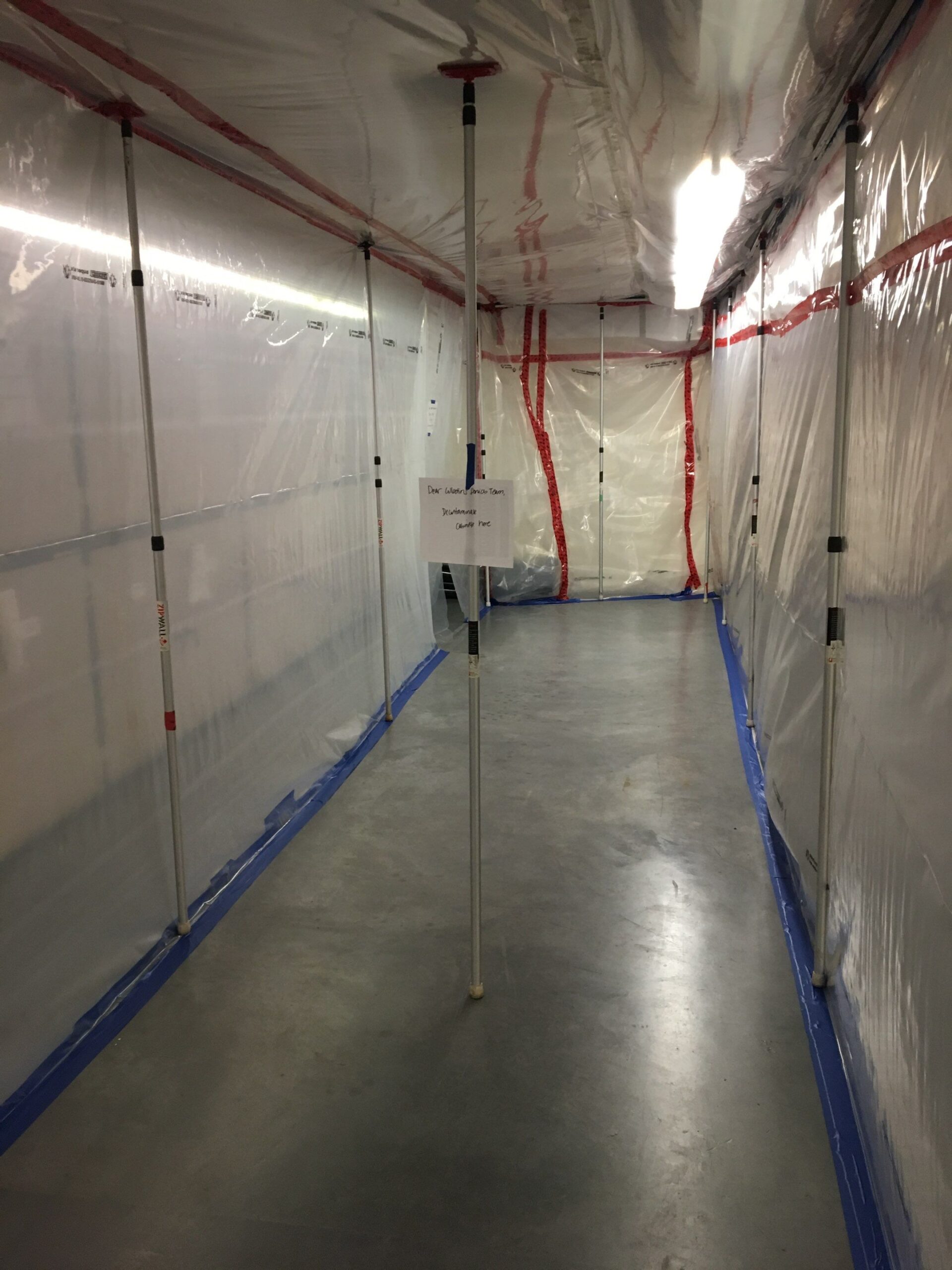
The work environment is managed through established containment to isolate affected areas and protect adjacent spaces. Asbestos-containing materials are removed using approved procedures at a government approved facility while containment remains in place.
Daily air monitoring is conducted throughout the abatement to confirm controls are working as intended. Once removal is complete, a final clean is performed, followed by clearance testing to confirm the area meets required safety standards before containment is removed.

Once asbestos-containing materials have been removed, containment remains in place while daily air monitoring continues to confirm conditions remain controlled. A final detailed clean is completed within the contained area, followed by clearance testing to verify the space meets required safety standards.
After clearance is achieved and containment is removed, we coordinate next steps so work can continue safely. This may include renovation, repair, or re-occupancy, depending on the project. Clear communication at this stage helps avoid delays, rework, or unnecessary disruption for other trades.
Focused on safety and project continuity
Asbestos abatement is about more than removal. It is about keeping people safe while allowing projects to move forward responsibly.
Our team focuses on careful planning, clear documentation, and coordination with other trades so abatement does not create unnecessary delays or complications.
Our Methods
Support for homeowners and property managers
Asbestos remediation affects people differently depending on the situation.
Homeowners often encounter asbestos during renovations or repairs in older homes. We help explain what needs to be addressed, what can wait, and how remediation fits into the overall plan.
Property managers, developers, and facility operators rely on asbestos remediation to be completed safely and predictably so projects can move forward without unnecessary delays or compliance issues.
Asbestos remediation across Edmonton and area
Grimebusters provides asbestos remediation throughout Edmonton and surrounding communities including
Being local helps with coordination, site access, and understanding how asbestos is commonly encountered in buildings across this region.
Questions We’re Often Asked
Testing is used to confirm whether suspected materials contain asbestos and to help define the scope of the work.
Where asbestos is suspected, a thorough assessment will be conducted, which may include appropriate sampling and laboratory analysis. The results will be analyzed, and a written report will be provided documenting the assessment findings and any recommendations for further action.
If suspected asbestos-containing materials could be disturbed by renovation, repair, or demolition, the issue should be assessed before that work continues.
Cutting, removing, or disturbing materials before you know what they contain can create unnecessary safety concerns and project delays.
If asbestos is confirmed, we’ll explain what needs to be addressed before the next phase of work begins.
Containment isolates the affected work area from surrounding spaces while asbestos-containing materials are being handled.
We use established containment and removal procedures designed to limit fibre release and protect adjacent areas. Air monitoring is carried out during the abatement to confirm that the controls are working as intended.
Clearance testing takes place after asbestos-containing materials have been removed and the contained area has received a final detailed clean.
The purpose is to verify that the space meets the required safety standards before containment is removed.
Once clearance has been achieved, we can help coordinate what happens next.
There isn’t one timeline for every project.
Timing depends on the materials involved, the size and location of the affected area, containment requirements, testing, the amount of material being removed, and what work needs to follow.
We’ll explain the scope and sequencing once testing results and site conditions are understood.
There isn’t one timeline for every project.
Timing depends on the materials involved, the size and location of the affected area, containment requirements, testing, the amount of material being removed, and what work needs to follow.
We’ll explain the scope and sequencing once testing results and site conditions are understood.
The next phase should begin after the required abatement work, final cleaning, and clearance steps have been completed.
Once clearance is achieved and containment can be removed, renovation, repairs, or re-occupancy can move forward based on the project plan.
If repairs are required afterward, our Restoration and Reconstruction team can help keep the transition coordinated.
Yes.
Asbestos abatement often sits within a larger renovation, remediation, or restoration project. We focus on sequencing the work so asbestos-containing materials are addressed before other trades disturb the affected area.
When the project also involves property damage or remediation, our Property Remediation and Disaster Restoration services can help keep the different stages connected.
If asbestos work forms part of a larger insured property restoration, clear scope, documentation, sequencing, and communication are important.
We’ll keep the abatement work clearly defined and coordinate the transition into any restoration work that follows. Insurance coverage and approval decisions remain specific to the individual claim.
That depends on where the asbestos is located, the scope of the work, and how the affected area can be contained.
We’ll explain the access requirements for your property before work begins so you understand which areas can and can’t be used during the project.
Avoid disturbing the suspected material.
You don’t need to determine whether it contains asbestos yourself. Contact us and we can explain the assessment and testing process before renovation, demolition, or repair work continues.
Planning work that may involve asbestos?
If asbestos has been identified or may be present, Grimebusters can help you understand what needs to happen before work moves forward.
Early planning helps avoid delays and ensures abatement is handled properly.